
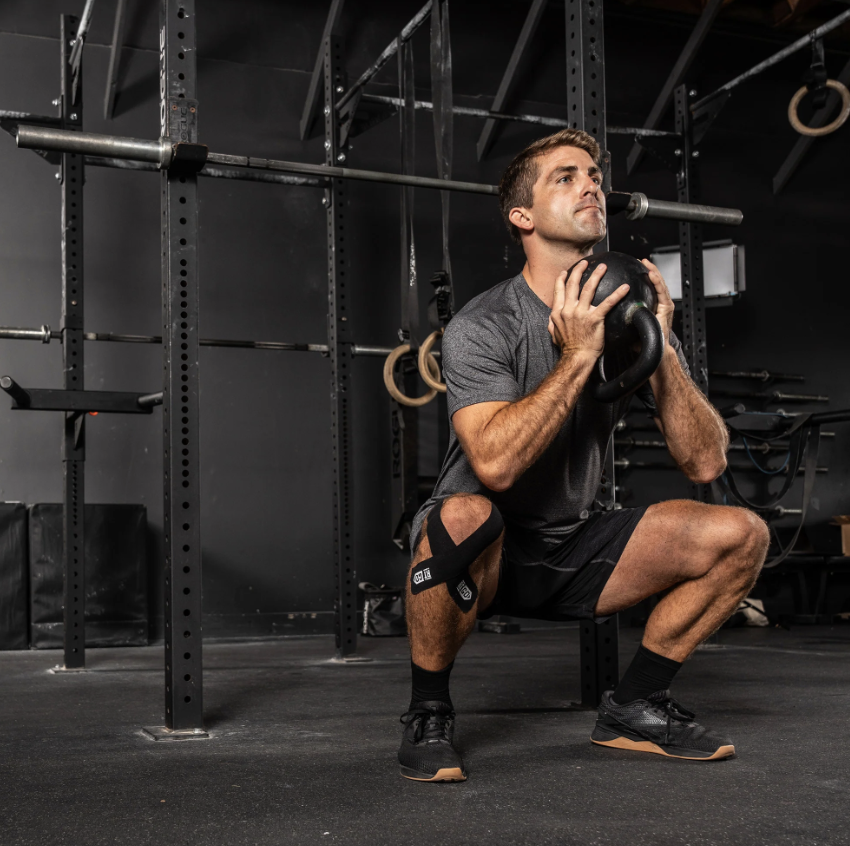
You may have heard of kinesiology tape (KT tape) before or seen athletes covered with brightly coloured tape during sporting events. It often raises the question: does taping actually do anything? While KT tape is not a miracle cure for anything, KT tape can be an effective tool to improve movement quality, support recovery, and promote circulation. Taping is not just for high-level athletes; it can be used for anyone looking to move more comfortably during exercise and during activities of daily living.
Taping is a great option, as it has the ability to last for multiple days to provide support for longer periods of time. KT is unlike traditional athletic tape, which is meant to restrict movement and provide structural support to stabilize a joint. KT tape works by lifting the skin, causing gentle stimulation to the mechanoreceptors on the skin. These mechanoreceptors help to provide the brain with information about movement, body position and touch. By increasing the sensory input that is going to the nervous system, KT tape helps to enhance our body awareness and change how we perceive movement and discomfort. Since the tape is flexible, it is comfortable to leave on for multiple days without restricting range of motion.
The lifting effect of the tape is its ability to improve circulation and lymphatic flow in the area it’s applied to, allowing fluid to move more efficiently. This is where taping comes in to help manage inflammation, bruising and swelling during the recovery process.
The most common type of taping is for pain reduction, which can significantly improve the quality of our movements during a workout. From neck pain, back pain, shoulder pain, knee pain to foot pain, kinesiology taping can be effective and tailored to the individual and their specific needs. This is not to say that taping can fix the injury itself, but it can change how our brain perceives pain, supporting more comfortable movement. Whether you are dealing with chronic or acute pain, when our bodies are in pain, the quality of our movement suffers as we may compensate in ways to avoid pain, leading to changes in technique. This is where taping comes in as a tool to either directly help with the pain point or by increasing body awareness to promote proper technique during certain exercises. That’s what is really behind eliminating pain for good!
Another method of taping is known as postural taping; this type of taping is commonly seen on athletes, as performance is more efficient when the body is aligned in the correct way. With the amount of time we spend either working on a computer or looking down at our phone, these habits often lead to improper posture. Over time, we see forward head posture, rounded shoulders and tension throughout the neck and upper back. Postural taping provides the body with a gentle reminder to pull back into proper posture and alignment due to the elasticity of the tape. When we move into poor postural positions, the pull of the tape creates a sensation on the skin that brings awareness to the position and helps to signal our brains to bring us into a more beneficial posture. This is helpful because the tape can stay on the body for 3-7 days, which provides the body/brain more time to create lasting change.
Lastly, taping can be used for swelling and edema due to the lifting effect of the tape. When an injury occurs, i.e ankle sprain/break, fluid and swelling accumulate as a part of the body’s natural healing response. However, excessive swelling can cause discomfort, stiffness surrounding the injury and reduced mobility. As previously mentioned, the lifting effect of the tape increases the amount of blood flow and lymphatic drainage to help reduce inflammation and promote range of motion. This is why taping is commonly seen after an ankle sprain, muscle strain or significant bruising to promote the healing process in a more efficient manner.
All in all, kinesiology tape is an effective tool, especially when used in conjunction with working out and/or other manual therapies. Again, taping is one piece of the puzzle, but can have huge benefits for those in need of some extra support to reduce pain, promote recovery and better performance. If this is something that interests you, whether the goal is pain reduction, posture, or reducing inflammation, feel free to ask your trainer, as it is a quick and easy service that can be provided during your training session.
